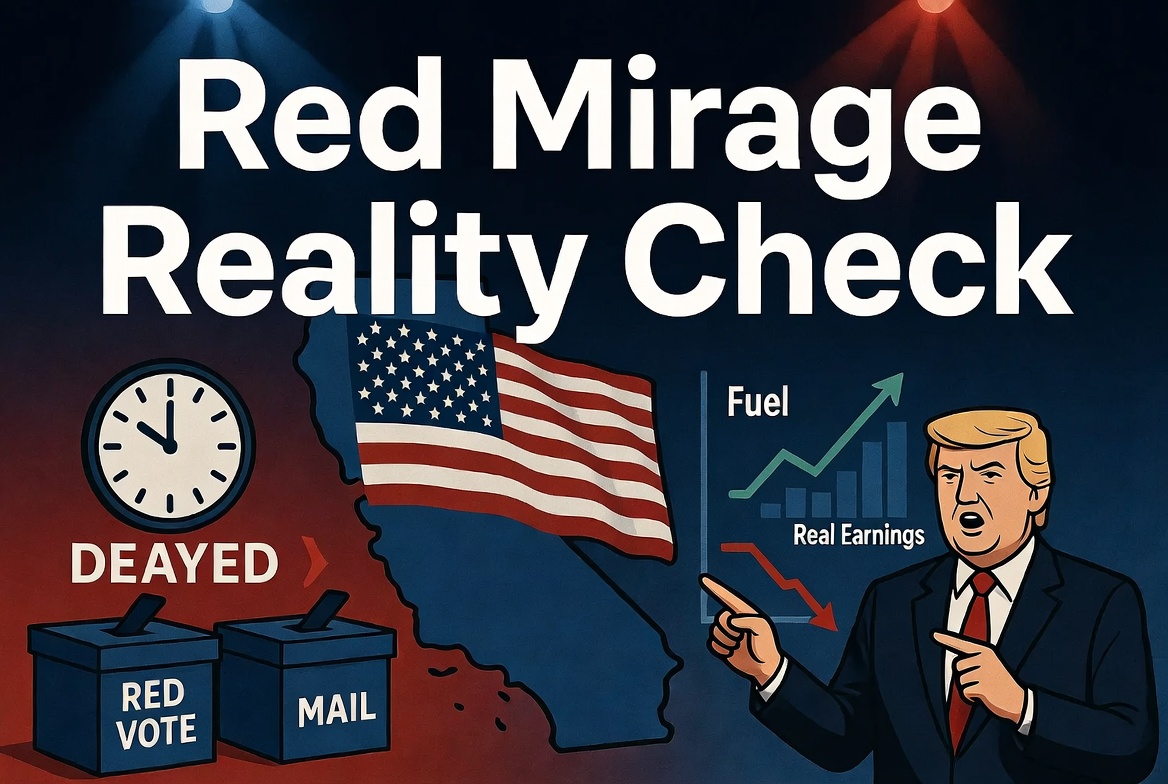
California's Primary and the "Red Mirage"
California's top-two primary system and heavy reliance on mail-in ballots (with post-Election Day arrivals allowed) routinely produce delayed counts. In the 2026 LA mayoral primary, early in-person votes favored Spencer Pratt (Republican), but later mail/provisional ballots shifted Nithya Raman (Democrat) ahead for second place behind incumbent Karen Bass. This is the well-documented "red mirage/blue shift": Election Day votes (often more Republican, rural/suburban) report first; mail ballots (heavily Democratic in recent cycles) come later.
This pattern held in 2020 and prior cycles—not unique to Trump. Trump and allies highlighted the slow count and Pratt's early lead evaporating, questioning transparency in a deep-blue state with a history of processing issues. No widespread fraud was proven (officials and even a Trump-appointed U.S. attorney found none), but skepticism about extended counting windows, ballot harvesting legality in CA, and lack of real-time audits is reasonable policy critique, not "delusion." California’s system invites exactly this dynamic; calling it out isn't misunderstanding basics—it's noting incentives in a one-party dominant state. Steve Hilton advanced in the gubernatorial primary despite similar delays.
Trump's claim that his pressure sped up certification for Hilton reflects political theater common on all sides (Democrats did analogous things post-2016/2020). Projections by AP etc. rely on models; actual certification lags. Dismissing concerns as "sinister" while defending California's rules ignores why trust eroded: 2020 precedents, relaxed rules during COVID, and documented issues like lost ballots or chain-of-custody gaps in various states (though not flipping national results).SPLC ReportThe Southern Poverty Law Center has a documented history of expansive labeling (mainstream conservatives, immigration critics, or religious groups as "hate/extremist"), inflated counts, and financial controversies—including settlements over misleading fundraising. Its 2025/2026 report framing Trump policies (immigration enforcement, Jan. 6 pardons, DOJ shifts) as empowering "extremism" is activist advocacy, not neutral data.
Pardoning Jan. 6 defendants (many charged with non-violent offenses like trespass/parading, with prosecutorial discretion debates and uneven treatment vs. 2020 riot cases) is a standard executive clemency move—presidents of both parties have done controversial ones. Immigration enforcement targets illegal entries, not "minorities" broadly; legal immigration continues. Crime stats and border encounters under prior policies are empirical, not "bigotry." SPLC's methodology often equates policy disagreement with extremism, eroding its credibility as an objective tracker.Economy and InflationBLS data confirms CPI rose ~4.2% YoY in May 2026 (highest in years), driven heavily by energy (gasoline/fuel oil spikes from the Iran conflict/Strait of Hormuz disruptions). Real average weekly earnings dipped modestly (~0.4% YoY in the article's framing; hourly trends mixed but pressure real).
Trump's "I love the inflation" quip (context: it will drop post-war via restored oil flows, referencing U.S. actions against Iranian exports) is clumsy phrasing. Central point: Energy inflation traces to geopolitical shocks from the Iran war, not domestic policy alone. Pre-war trends, fiscal/monetary legacies (spending, deficits), and supply constraints matter. Post-conflict oil normalization could ease prices—as Trump argued—similar to past supply responses. "Americans working more, earning less" reflects broad post-pandemic/global pressures; attributing solely to Trump ignores Fed actions, prior inflation peaks (2021-2023), and wage growth in nominal terms for many sectors. Unemployment remained low into 2026; real wage recovery varies by quintile and metric (PCE vs. CPI adjustments often show different pictures).Critics frame every headwind as Trump's failure while crediting exogenous positives elsewhere. Election skepticism, clemency, and energy geopolitics deserve debate on merits—not dismissal as "Trump riling followers" or "projecting ignorance." California's quirks, SPLC bias, and war-driven inflation are observable; spin doesn't change mechanics or data. Persistent low trust stems from opaque processes and institutional credibility gaps, not one man's tweets.


0 Comments
Leave a Comment
Comments are moderated and appear after approval. Your email is required but will not be published.